
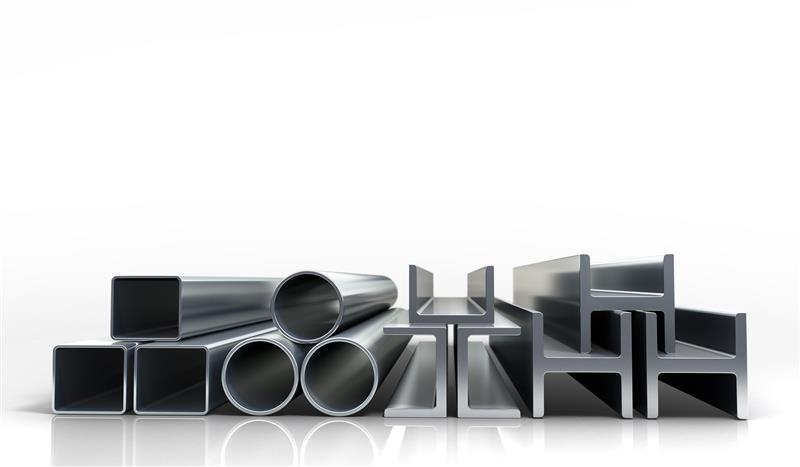
Industries around the world commonly use mild steel, also known as low-carbon steel, making it one of the most widely utilized forms of steel today. Its wide availability, affordability, and versatility make it a preferred material in various industries, from construction and manufacturing to automotive and home appliances. In this article, we explain what mild steel is, break down its chemical composition, highlight its key properties, and identify the industries that use it most commonly.
What Is Mild Steel
This is a type of carbon steel with a low carbon content—typically around 0.05% to 0.25% by weight. Unlike high-carbon steel, mild steel doesn’t harden easily and is not as brittle. Its relatively soft, malleable, and ductile nature makes it suitable for applications that require both strength and flexibility.
Manufacturers typically avoid alloying them with significant amounts of other elements, and it often lacks corrosion resistance unless they coat or treat it. However, its machinability and weldability make it a go-to material for general-purpose fabrication and structural work.
Composition
The typical chemical composition includes:
- Carbon (C): 0.05%–0.25%
- Manganese (Mn): 0.25%–0.90%
- Silicon (Si): up to 0.40%
- Sulphur (S) and Phosphorus (P): Traces, usually kept to a minimum
The low carbon content is the defining feature of these types of steel. It helps retain ductility and makes the material easy to cut, drill, and weld. However, the trade-off is that mild steel has lower tensile strength compared to high-carbon or alloy steels.
Properties
1. High Ductility and Malleability
They can be stretched or shaped without breaking, making it ideal for processes like rolling, forging, and bending.
2. Good Weldability
Due to its low carbon content, mild steel is easy to weld using common welding techniques such as MIG, TIG, and arc welding.
3. Magnetic Properties
These kinds of steel exhibits ferromagnetic properties, so engineers often use it in applications that require magnetism, such as electric motors and transformers.
4. Poor Corrosion Resistance
They are susceptible to rusting when exposed to moisture and air. Manufacturers often apply protective coatings such as galvanization or painting to enhance its durability.
5. Cost-Effective
One of the most affordable steel types, they provide a great balance between cost and performance, especially in large-scale projects.
Common Uses
Thanks to its versatility, mild steel is used in a wide range of industries. Here are some of its most common applications:
1. Construction
They are widely used in building structures such as beams, columns, trusses, and reinforcement bars (rebars). It provides strength and flexibility, making it ideal for earthquake-resistant construction.
2. Automotive Industry
Automakers often use mild steel to manufacture car bodies, chassis, and various structural components because of its excellent formability and crash resistance.
3. Manufacturing and Fabrication
They are used to manufacture machinery parts, industrial equipment, tools, and frames. Its machinability makes it suitable for mass production processes.
4. Pipes and Tubes
MS pipes are commonly used in plumbing, gas pipelines, and water systems. They offer an economical and durable solution for fluid transport.
5. Furniture and Appliances
From office desks to storage racks, mild steel is used to fabricate furniture and appliance frames because of its strength and ease of fabrication.
Conclusion
Mild steel remains a foundational material in modern industry due to its combination of affordability, versatility, and ease of use. While it may lack the hardness and corrosion resistance of other steels, its performance in structural and fabrication applications continues to make it indispensable. Whether you’re building a skyscraper or crafting a simple machine part, mild steel offers a reliable and practical solution.
Suggested Sources


Leave a Reply